The Architecture of an Integrated Life where-nature-meets-lifestyle-in-bali.png239.96 KB We have reached a curious moment in the chronicle of global destinations. The old categories have dissolved. A place is no longer just a beach, a city, a mountain retreat. The most compelling locations today are those that offer a cohesive, livable philosophy—a framework for being. Bali has not merely entered this arena; it has come to define its highest expression. It has evolved from a picturesque island into the world’s preeminent lifestyle destination bali, a place where the very concept of “lifestyle” is inseparable from the natural world. This is not about using nature as a scenic backdrop for human activity. It is about a fundamental, daily reorientation where the natural environment is the primary participant, the source of inspiration, the metric for health, and the blueprint for community. Here, the nature lifestyle bali and the wellness lifestyle bali are not parallel tracks; they are the same river, flowing from a single source. This integration is physically manifested in the revolutionary bali lifestyle space—homes, workplaces, and social hubs built from and for the island’s ecology. And underpinning it all is the non-negotiable, ever-evolving practice of a sustainable lifestyle bali, a conscious pact between resident, visitor, and island to protect the very foundation upon which this extraordinary way of life is built. This is the story of that integration, an exploration of how Bali designed a life where stepping outside is not an escape, but a return to the center of everything.
The Foundation: Tri Hita Karana as the Original Lifestyle Blueprint
To understand the modern lifestyle destination bali, one must first recognize that it is not an imported concept. It is a sophisticated amplification of a code that has existed for over a millennium. The Balinese Hindu philosophy of Tri Hita Karana—harmony with God, people, and nature—is the island’s original operating system for a good life. Unlike Western paradigms that often position humanity against or above nature, this philosophy places us within a sacred, tripartite relationship.
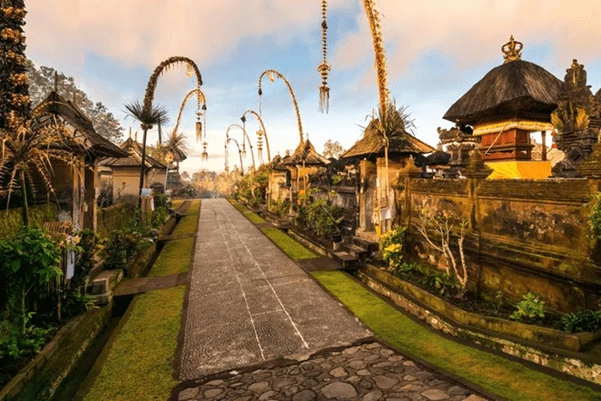
In practical, daily terms, this means the nature lifestyle bali is not an aesthetic choice; it is a spiritual and communal imperative. The morning ritual of preparing canang sari (offerings) uses elements of nature—flowers, rice, banana leaf—to honor the divine. The world-famous subak rice terrace system is a UNESCO-recognized marvel of democratic water management that ensures social equity (Pawongan) and agricultural abundance (Palemahan) as an act of gratitude. When a Balinese farmer tends his field, he is not just growing food; he is participating in a cosmological ritual that maintains balance. This foundational worldview is the silent, powerful current beneath all of Bali’s contemporary appeal. It provides an authentic gravity that prevents the lifestyle destination from feeling like a manufactured theme park. The modern seeker arriving in Bali, whether for a week or a year, is intuitively drawn to this coherence. They are not just buying a villa with a rice field view; they are, often unconsciously, seeking to plug into a system where life feels purposefully integrated. This ancient philosophy is the bedrock upon which the modern bamboo towers and organic cafes are built, ensuring they have roots deeper than the latest trend.
The Manifestation: The "Bali Lifestyle Space" – Architecture as Ecological Dialogue
The most visible and transformative expression of this integrated life is the bali lifestyle space. This is where philosophy becomes form, where the relationship with nature is literally built into the walls. This architecture represents a radical departure from the enclosed, air-conditioned boxes of modern urbanity. It is a declaration that a building should be a filter, not a barrier.
The movement was pioneered by visionaries like the late John Hardy and his team at Ibuku, who transformed bamboo from a construction material into a poetic language. Places like the Green School, the Green Village, and the Sharma Springs home are not just buildings; they are living ecosystems. Walking into the heart of the Green School’s open-air classrooms, you are met not with the hum of fluorescent lights, but with the sound of the Ayung River and the rustle of wind through soaring bamboo arches. Light is dappled, air moves freely, and the boundary between “indoors” and “outdoors” is deliberately blurred. This design philosophy, studied and lauded in publications like National Geographic and Architectural Digest, does something profound to human psychology. It reduces stress, enhances creativity, and creates a constant, gentle awareness of the natural world. You are always in dialogue with the weather, the time of day, the season.
This principle has cascaded down to every level of the lifestyle destination. Boutique hotels like Bambu Indah in Ubud or The Sanctoo in Umalas use reclaimed joglo wooden houses, natural ponds for swimming, and outdoor bamboo shower gardens. Co-working spaces like Tribal in Pererenan are designed with vast open sides, living green walls, and pools that members can dip into between video calls. Even the ubiquitous, modest warung is often a simple open pavilion (bale), oriented to catch the breeze. The bali lifestyle space teaches a simple, powerful lesson: your environment is not separate from you. It is your shell, your context, and your partner in well-being. To live in such a space is to experience the nature lifestyle bali in its most immediate, tangible form. You wake up with the sun, not because you’re disciplined, but because the light pours into your bedroom. You are cooled by the evening air, not a machine. Your home breathes, and in doing so, it teaches you to breathe more deeply.
The Rhythm: Weaving Wellness and Nature into the Daily Fabric
Within these purpose-built spaces, a distinctive daily rhythm emerges—a rhythm that defines the wellness lifestyle bali. But crucially, this wellness is not a scheduled, compartmentalized activity. It is the texture of the day itself, inextricably linked to the natural environment.
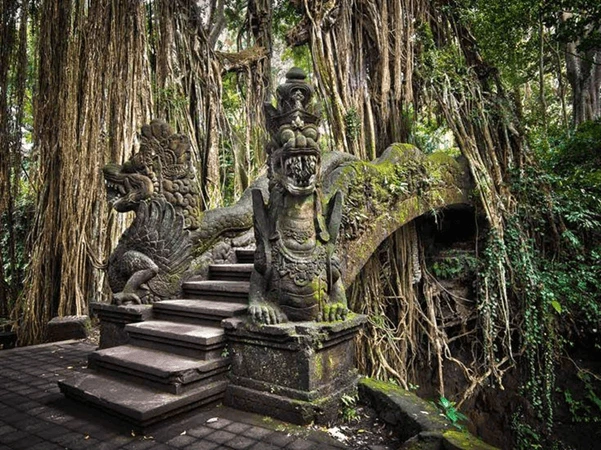
Consider a Tuesday. It does not begin with an alarm clock, but with the gradual, pink-gold illumination of the sky over the rice fields. The first act of the day might be a “forest bath” walk through the nearby monkey forest, a practice grounded in the Japanese concept of Shinrin-yoku, which has found a natural home here. The air is thick with negative ions and the scent of damp earth and frangipani. This isn’t “exercise”; it’s sensory immersion. Later, a yoga session doesn’t happen in a sterile studio, but on an open-air platform (shala) perched at the edge of a gorge, the instructor’s voice mingling with the roar of the river below. The body stretches and strengthens against a panorama of green, making the practice feel less like a workout and more like a physical conversation with the landscape.
Nutrition follows the same principle. The wellness lifestyle bali is deeply culinary, and the island’s fertile volcanic soil is the silent chef. A meal is an event of provenance. It might be a breakfast of dragon fruit, papaya, and kelapa muda (young coconut) plucked that morning from the trees on the property. Lunch could be a vibrant urap (steamed vegetable salad with spiced coconut) from a warung that sources from the owner’s garden. This is the essence of a nature lifestyle bali: the food on your plate is a direct, unprocessed result of the sun, rain, and soil of the very land you stand on. It is nutrition as geographical expression.
This rhythm extends into community and creativity. An afternoon might be spent at a weekend market like Samadi or Love Anchor, not merely shopping, but connecting with farmers, ceramicists, and clothing designers who share a philosophy of natural materials and mindful production. As documented in community reports from the Canggu Creative Council, these gatherings are as much about social wellness and economic sustainability as they are about commerce. The evening might close with a sound healing session where the frequencies of Tibetan singing bowls and gongs are absorbed not by drywall, but by the living bamboo of the space, the vibrations felt in the body and the structure simultaneously. In this lifestyle, wellness is not a destination you reach after a 10-day cleanse; it is the quality of the air you breathe, the food you eat, the community you engage with, and the spaces you inhabit, all day, every day. where-nature-meets-lifestyle-in-bali-description.png132.66 KBThe Imperative: The "Sustainable Lifestyle Bali" – From Philosophy to Daily Practice
The exquisite integration of nature and lifestyle is, however, perched on a precipice. Bali faces monumental environmental challenges: critical water scarcity, plastic pollution, waste management crises, and the cultural strain of overtourism. The beautiful, open bali lifestyle space is vulnerable. This has forced an urgent evolution, turning the philosophical ideal of Tri Hita Karana into a set of non-negotiable daily practices. The sustainable lifestyle bali is no longer a niche interest for activists; it is the essential maintenance manual for the entire lifestyle destination.
This sustainability is active and multi-layered. At the individual and household level, it is lived through minute, conscious choices. It is the now-ubiquitous sight of the reusable water bottle and shopping bag. It is the widespread use of refill stations for everything from drinking water to laundry detergent and shampoo, a grassroots system that has exploded across the island, effectively creating a parallel, plastic-free economy. It is choosing a scooter over a car, and a bicycle over a scooter. It is the meticulous separation of organic waste for composting—a practice taught in countless villa complexes and local banjar (community ward) initiatives.
At the business and community level, the innovation is profound. The ROLE Foundation in Nusa Dua trains underprivileged Balinese women in zero-waste skills, from making natural dyes to managing eco-hostels. The now-famous Sungai Watch initiative, born on the island, has deployed hundreds of trash barriers in rivers across Indonesia, stopping thousands of tons of plastic from reaching the ocean, and using collected data to advocate for corporate accountability—a model highlighted in environmental reports from Forbes Asia. Restaurants like Mason in Canggu have built their entire supply chains around hyper-local, regenerative farms, while cafes like Peloton Supershop champion a 100% plant-based menu with a near-zero-waste kitchen.
This collective action transforms the lifestyle destination into a living laboratory. The visitor or resident is not shielded from the island’s problems; they are invited to be part of the solution. Choosing where to stay, eat, and shop becomes a series of ethical votes. Do you support the hotel with the token “green towel” policy, or the one that treats its own wastewater and grows 70% of its food on-site? This constant, low-grade consciousness is the true sustainable lifestyle bali. It’s understanding that the luxury of a sunset view carries the responsibility to protect the horizon. It’s knowing that the spiritual clarity gained from a temple visit must be matched by the practical clarity of refusing a plastic straw.
The Tension and The Synthesis
This idyllic portrait is not without its shadows. The very popularity of this lifestyle creates its own pressures. The demand for exquisite bali lifestyle spaces drives up land prices, sometimes displacing local communities. The quest for authentic wellness can tip into cultural commodification. The digital nomad, working remotely from a jungle co-working space, still depends on an infrastructure that strains local resources.
Yet, it is within this tension that Bali’s most important lesson lies. The island demonstrates that a modern, fulfilling lifestyle is not only possible within ecological limits but can be profoundly enhanced by them. The nature lifestyle bali isn’t a retreat from modernity; it’s a redefinition of it. True wealth is re-framed as clean air, fertile soil, community connection, and time marked by the sun rather than the clock. The wellness lifestyle is shown to be a holistic state dependent on the health of one’s environment. The sustainable lifestyle is revealed not as a sacrifice, but as the only logical foundation for everything else.
In the end, Bali stands as a powerful, imperfect, and evolving prototype. It is a lifestyle destination that asks a profound question: what if our daily lives were not separate from nature, but a continuous celebration of and negotiation with it? Where your home is grown from the earth, your food is a map of the local terrain, your work is cooled by the forest breeze, and your leisure is the simple act of being present in a breathtaking world. This is the powerful synthesis Bali offers. It is more than a place to visit; it is an immersive education in living integrally. It shows us that the future of a desirable life may not lie in building higher tech walls against the world, but in designing smarter, more humble, and more beautiful ways to live within it, breath by conscious breath.
Related Tags :
lifestyle destination bali, nature lifestyle bali, wellness lifestyle bali, bali lifestyle space, sustainable lifestyle bali