Beyond the Itinerary, Into the Rhythm a-guide-to-lifestyle-and-experience-travel-in-bali.png141.81 KB Forget the checklist. Erase the image of a frantic dash from temple to waterfall to beach club. The Bali that endures, the one that seeps into your soul and alters your perspective, operates on a different frequency. It is not found in a place, but in a pace. This guide is not about what to see; it is about how to see, and more importantly, how to be. Welcome to the realm of lifestyle travel bali and experience travel bali, where the goal is not merely to visit, but to temporarily live, to feel the island’s rhythm in your own heartbeat. This is a bali travel guide for the curious, the connective, and those hungry for a cultural experience bali that feels authentic and personal. We will navigate through the well-trodden paths to find the unique places in bali that offer not just a photo, but a feeling. This is about constructing a journey that feels less like tourism and more like a short, passionate study abroad program in the art of balanced living.
The Foundational Philosophy: Tri Hita Karana as Your Travel Compass
To travel well in Bali, you must first understand its operating system. The Hindu-Balinese philosophy of Tri Hita Karana—harmony with the spiritual, the social, and the natural worlds—isn’t just for locals. It is the ultimate framework for meaningful experience travel bali. Let it be your compass.
Parhyangan (Spiritual Harmony): This is the recognition of the sacred in everything. It’s in the smoke of incense at a family shrine, the intricate canang sari offerings on the ground, the respectful silence in a temple inner courtyard. As a traveler, you honor this not by just visiting Pura Tanah Lot, but by observing with quiet respect, dressing modestly when required, and perhaps participating in a blessing ceremony with an open heart, not just a camera. This spiritual layer is the subtle software that runs the island, and tuning into it transforms your experience from scenic to sacred.
Pawongan (Social Harmony): This is the warmth of community. It’s the smile from a warung owner, the laughter shared with a local craftsman, the collective effort of a village preparing for a ceremony. Lifestyle travel bali means engaging with this. It’s choosing a homestay over a faceless hotel, taking a cooking class in a family compound, or simply spending an afternoon chatting with your driver about his family’s galungan traditions. Your journey becomes a series of human connections.
Palemahan (Natural Harmony): This is the profound respect for the environment that sustains life. It’s seeing the world-famous rice terraces not as a backdrop, but as a living, breathing testament to the ancient subak cooperative water system. It’s understanding that the ocean, the forests, and the volcanoes are considered deities. Your travel practice should mirror this: refusing single-use plastics, supporting eco-conscious businesses, and treading lightly on the trails and reefs.
Adopting this triad as your guide ensures your trip contributes to, rather than extracts from, the Bali you’ve come to find.
Curating Your Lifestyle Travel Experience: The Neighborhood as a Vibe
Lifestyle travel bali is deeply neighborhood-centric. Each area offers a distinct flavor of life. Forget “staying in Bali”; decide what version of the Bali life you want to sample.
Ubud: The Mindful Culturalist’s Hub. Yes, it’s popular, but beyond the central market lies its true soul. This is for the traveler who wants their day to be a blend of introspection and creation. Your morning starts with a rigorous Ashtanga class at The Yoga Barn or a silent walk through the Campuhan Ridge. Your afternoon is spent in a private studio learning Silver Smithery from a fifth-generation artisan in the village of Celuk, or attending a Gamelan workshop where you learn the basics of the intricate, metallic melodies. Evenings are for farm-to-table dinners at Locavore or for attending a deeply moving Kecak Fire Dance at the temple of Pura Dalem Taman Kaja, performed by the local community. The Ubud lifestyle is about depth, artistry, and cultural immersion.
Canggu & Pererenan: The Coastal Creative’s Playground. This is the epicenter of the modern lifestyle travel bali scene. It’s a pulsating hybrid of surf, digital culture, wellness, and gastronomy. The rhythm here is set by the sun and the swell. A day involves a sunrise surf session at Old Man’s Beach, followed by a cold brew and work at a co-working space like Dojo, where the dress code is board shorts and ambition. Afternoons are for matcha lattes, acai bowls, and perhaps a functional fitness class. The lifestyle is curated through consumption: vintage markets, minimalist boutiques, and Instagram-famous eateries. But the magic is in the community—the spontaneous conversations, the collaborative energy, the sense of being in a global village that’s constantly creating itself. For a more subdued version, Pererenan offers a slightly slower, more residential feel just next door.
Sidemen & the East: The Spiritual Quietist’s Retreat. If your ideal lifestyle involves waking up to the sight of Gunung Agung piercing the morning mist, with only the sound of roosters and rustling rice, this is your zone. Sidemen is a tapestry of lush valleys, traditional weaving villages (Songket cloth), and breathtaking serenity. A stay here is an active embrace of slowness. You hike through cascading rice terraces with a local guide who points out medicinal plants. You spend an afternoon with a family learning to weave the brilliant endek fabric. You read on your veranda as the clouds dance around the volcano. This is experience travel bali at its most restorative and authentic, offering a window into a traditional Balinese life that persists with gentle stubbornness.
Sanur: The Refined Continental’s Haven. Often overlooked by the trendy set, Sanur offers a mature, elegant version of the Bali lifestyle. Its long, calm beachfront path is perfect for sunrise cycling and leisurely strolls. The vibe is one of understated sophistication, with excellent galleries, heritage hotels like the Hotel Tjampuhan, and a thriving dining scene that leans Italian and seafood. It’s a hub for long-term expats and travelers who prefer a more settled, cultural, and less chaotic atmosphere, with easy access to the artistic pockets of the island.
A cultural experience bali is not a spectator sport. It is participatory, respectful, and often arranged through personal connection.
Learn a Sacred Craft: Move beyond buying souvenirs to understanding their soul. In the village of Tenganan Pegringsingan, one of Bali’s oldest Bali Aga villages, you can witness the incredibly complex double-ikat weaving process for making geringsing cloth, believed to have magical protective properties. In Mas, spend a day with a master woodcarver, learning the stories behind the figures of gods and demons you’re shaping. The IDEP Foundation sometimes offers workshops on traditional natural dyeing and weaving, connecting you directly with preserving heritage.
Participate in a Village Festival (Odalan): Every temple in Bali has its anniversary festival (Odalan) every 210 days. These are not tourist events; they are vibrant, chaotic, beautiful expressions of faith and community. With respectful inquiry through your homestay or guide, you might be invited to witness, or even gently participate in, the preparations—helping to carry offerings, or simply sitting quietly at the back to observe the prayers, the gamelan music, and the joyful processions. This is a privilege and the pinnacle of experience travel bali.
Undergo a Traditional Healing Session: For a deep cultural experience bali, seek out a respected Balian (traditional healer). This is not a spa treatment; it’s a spiritual and physical consultation. A Balian might use prayer, meditation, massage (urut), or herbal remedies to address ailments. The process, often arranged through trusted local networks, is a profound insight into the Balinese worldview where illness is often seen as an imbalance in one’s spiritual or energetic state. It requires an open mind and deep respect.
Dine as a Guest, Not a Customer: The best meals are often not in restaurants. Book a “Cooking Class in a Family Compound.” You’ll start at the morning market, learning to select ingredients, then return to a grandmother’s kitchen to prepare base gede (the fundamental spice paste) from scratch on a stone mortar. You’ll learn the ceremonial significance of dishes like lawar or bebek betutu. The meal that follows, eaten together, is a celebration of shared effort and culture.
A Travel Guide to the Unique & Uncommon
This bali travel guide must point you away from the crowds to the unique places in bali where memory is forged.
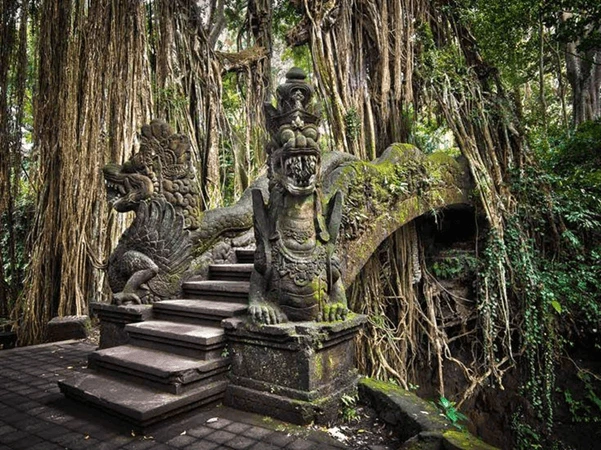
The Ghost Palace: Hotel Taman Bebek (Bali’s Forbidden Hotel): Nestled in the hills above Ubud near the Samsara Living Museum, lie the surreal, overgrown ruins of what was meant to be a luxury hotel for the Suharto family. Now reclaimed by jungle, with banyan trees bursting through floors and moss covering statuary, it’s a haunting, beautiful, and completely unofficial site. Finding it requires a local guide from nearby Sebatu, turning the visit into an adventure. It’s a poignant reminder of nature’s relentless reclamation.
The Underwater Temple Garden: Pemuteran’s Bio-Rock Reefs: In the remote north coast village of Pemuteran, a conservation miracle is happening. The Pemuteran Bay Coral Restoration Project uses low-voltage electrical currents (Biorock technology) to grow artificial reef structures at an accelerated rate. Diving or snorkeling here is like swimming through a futuristic, living temple garden—electrified steel frames shaped into domes, spirals, and even a giant naga (serpent) statue, all covered in bright, thriving coral and a breathtaking density of fish. It’s a stunning, hopeful vision of experience travel bali that directly funds marine restoration.
The Spiritual Source: Tirta Sudamala in Sebatu: While tourists queue at Tirta Empul, the nearby Tirta Sudamala in Sebatu offers a more serene, less commercialized water temple experience. The springs here are considered especially potent for spiritual cleansing. The setting is tranquil, surrounded by lush gardens and intricate stone carvings. Participating in a melukat (purification) ritual here, guided by a local priest, feels intimate and profoundly powerful.
The Bamboo Symphony: Kapal Bamboo Music Workshop: In the village of Kapal, near Mengwi, the Slukat Learning Center offers a unique chance to not just hear, but make music with bamboo. You’ll learn about the different instruments of a gamelan jegog (the powerful, bass-heavy bamboo orchestra of West Bali) and get to play in a collaborative, thunderously joyful session. The physical sensation of the vibrations through the giant bamboo instruments is an unforgettable cultural experience bali.
The Island Within an Island: Nusa Ceningan: While Nusa Lembongan and Penida draw crowds, tiny Nusa Ceningan, connected by a yellow bridge, retains a funky, bohemian charm. It’s the place for cliff-jumping at the Blue Lagoon, paddleboarding through serene mangroves, and enjoying fresh seafood at a shack overlooking the channel. It feels like a secret, adventurous outpost.
Practical Ethics: The How of Lifestyle Travel
This approach to travel demands a higher level of awareness.
Connect, Don’t Just Capture: Put your camera down for long stretches. Make eye contact. Learn basic Bahasa Indonesia phrases (terima kasih - thank you, apa kabar - how are you). The energy you put into connection is returned tenfold.
Invest in People, Not Just Products: Hire a local guide for a full day to explore their area. Commission a piece directly from an artist’s studio. Book treatments at a women’s cooperative spa. Ensure your money flows into the hands of practitioners.
Embrace ‘Jam Karet’ (Rubber Time): Western punctuality is not the law here. Ceremonies start when the preparations are complete. Your driver might be late because a family rite ran long. This fluidity is not inefficiency; it’s a different prioritization of life. Fighting it causes stress; flowing with it is part of the experience.
Travel Slow, Stay Longer: The essence of lifestyle travel bali cannot be rushed. Consider a two-week stay split between two neighborhoods rather than a frantic island tour. Rent a scooter or a bicycle for local exploration. Become a regular at a local warung.
Conclusion: The Takeaway is a Feeling
You will leave Bali with photographs, yes. But if you’ve traveled with the intention of lifestyle and experience, what you’ll truly carry home is a feeling—a sensory imprint of the smell of frangipani and incense, the taste of a perfect mango, the sound of gamelan echoing in a temple at dusk, the feeling of cool temple water on your skin, and the memory of genuine human warmth.
This guide has provided a framework, not an itinerary. Your task is to use the compass of Tri Hita Karana, choose your neighborhood vibe, seek out the unique places that call to you, and dive headfirst into the cultural experiences that frighten and excite you. Do not just visit Bali. Listen to its rhythm, engage with its people, respect its spirit, and for a short while, live its life. You won’t just have had a holiday; you will have collected a new way of being, a series of stories written not on paper, but on your soul. That is the ultimate promise of a journey to the Island of the Gods.
Related Tags :
experience travel bali, lifestyle travel bali, cultural experience bali, bali travel guide, unique places in bali